Many shops in Nepal start selling through Facebook and Instagram messages. That works, until you spend the whole day answering "price kati ho?" and "delivery huncha?" in the inbox. An ecommerce website lets customers see prices, stock and delivery options and order on their own, any time.
This guide explains what a good ecommerce website in Nepal needs, how to choose a platform, which payment and delivery options to plan for, how to help Google show your products, and a launch checklist. For the cost side, read my website cost in Nepal guide.
Do you need an ecommerce website yet?
Not every business needs a full online store on day one.
| Your situation | What usually fits |
|---|---|
| Few products, most sales from DMs | Catalog on WhatsApp Business plus a simple landing page |
| 20+ products, repeat orders, growing ad spend | Full ecommerce website |
| One product or one offer | Single landing page with an order form |
| Selling to shops and resellers | B2B catalog with enquiry or bulk order form |
If you are still testing products, a WhatsApp Business catalog can be enough. Once orders grow, a website saves time and looks more trustworthy.
Features every Nepali online store needs
Product pages that answer questions
Each product page should show clear photos from several angles, the price in NPR, sizes or variants, stock status, delivery time and a short, honest description. Most questions you get in DMs should already be answered on the page.
A short, simple checkout
Ask only for what you need: name, phone number, delivery address and payment method. Guest checkout (no account needed) helps first-time buyers. Every extra field is a chance for the customer to give up.
Local payment options
Customers in Nepal commonly pay with digital wallets, mobile banking or cash on delivery. Wallet providers such as Khalti offer a payment gateway that developers can add to a website or app, and eSewa has a merchant service for businesses. Check each provider's current requirements, fees and settlement times directly with them before you build, because these can change.
Cash on delivery
Many first-time buyers still prefer cash on delivery because they want to see the product first. Offer it, but protect yourself: confirm orders by phone or message before dispatch, especially for high-value items.
Delivery and returns information
State delivery areas, expected delivery time inside and outside the valley, delivery charges and your return or exchange policy in plain words. Put a short version on every product page and a full version on its own page.
Fast, mobile-first design
Most of your visitors will shop on a phone, often on mobile data. Compress images, keep pages light and test the whole journey, from product to "order placed", on a mid-range phone.
| Feature | Must have at launch | Can add later |
|---|---|---|
| Product pages with NPR prices | Yes | |
| Guest checkout | Yes | |
| Wallet or bank payment | Yes, at least one | More gateways |
| Cash on delivery | Yes | |
| Order confirmation (SMS, email or WhatsApp) | Yes | Automated messages |
| Customer accounts and wishlists | Yes | |
| Reviews | Yes | |
| Discount codes and loyalty | Yes |
Choosing a platform
There are three common routes. The right one depends on your product count, budget and who will manage the site.
| Option | Good for | Watch out for |
|---|---|---|
| Hosted store builder (e.g. Shopify) | Fast launch, low technical work | Monthly fees, checking local payment support |
| WordPress + WooCommerce | Flexible, many plugins, you own the site | Needs updates, security and good hosting |
| Custom-built store | Special features, high volume, integrations | Higher build cost and longer timeline |
Whatever you choose, make sure you own the domain, can export your product and order data, and know who will fix things when they break. You can see a store design example in my Gyane Store e-commerce landing page concept.
Help Google find your products
An online store only sells if people can find it. Google has a full ecommerce guide in Search Central that covers product data, URL structure, site structure and launching a new store.
Three things matter most for small stores:
- Clear structure. Use simple categories (for example Men, Women, Kids, Accessories) and link to your important products from category pages.
- Unique product text. Write your own descriptions. Copying the supplier's text gives Google no reason to show your page.
- Product structured data. Google's product structured data guide explains how this markup can help show price, availability and ratings in search results. Most good ecommerce platforms and plugins can add it for you.
For more, see my local SEO checklist and SEO services.
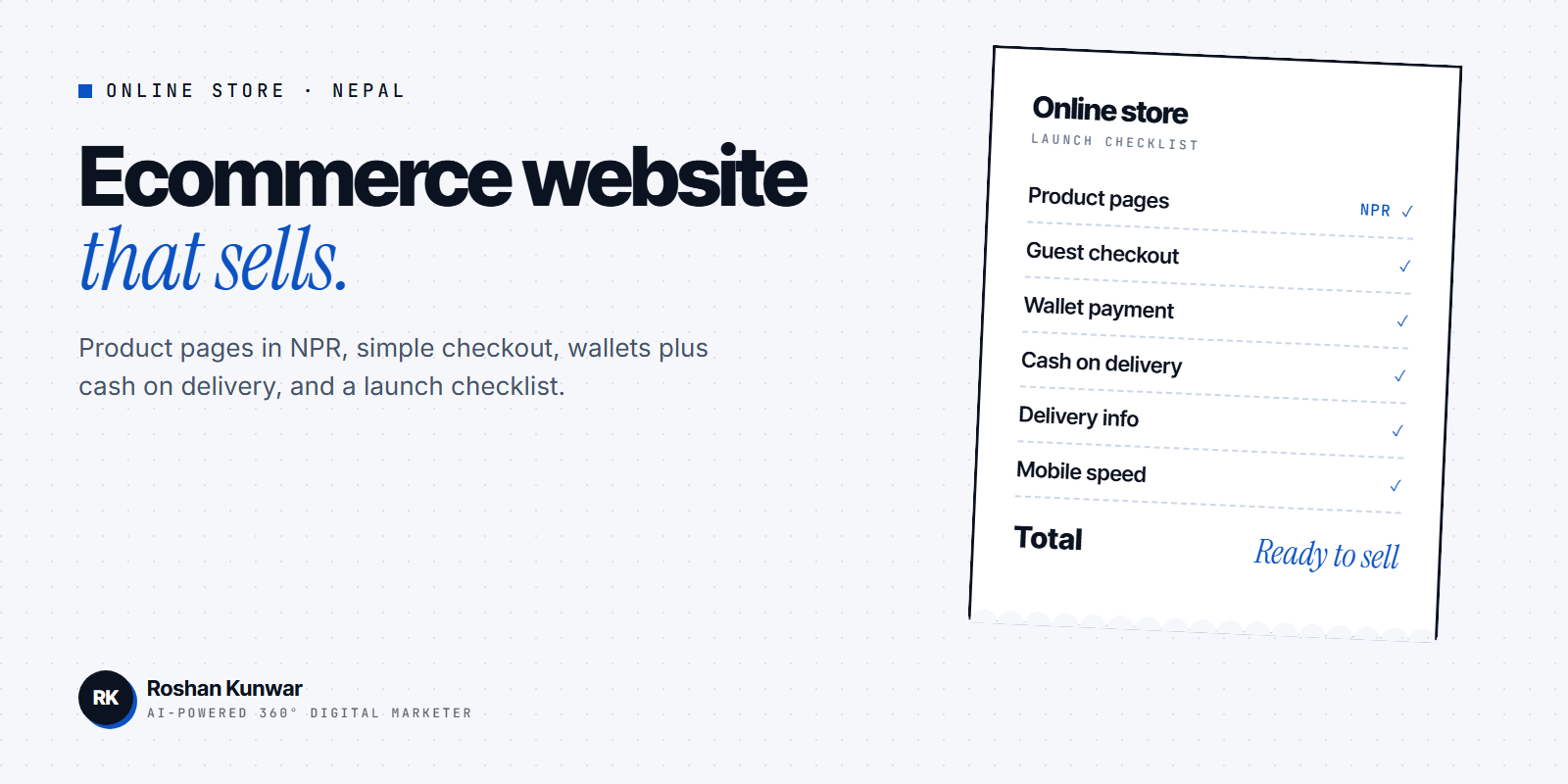
Launch checklist
Go through this before you share the link or run ads:
- Place a real test order with every payment method, including cash on delivery.
- Check order emails or messages reach both you and the customer.
- Open every page on a phone and check speed and layout.
- Make sure delivery, returns, privacy and contact pages exist and are linked in the footer.
- Add your phone number and WhatsApp link where customers can see them.
- Set up Google Search Console and submit your sitemap.
- Install analytics and the Meta pixel or conversions setup if you will run ads.
- Decide who answers orders and messages, and how fast.
After launch: getting the first orders
A new store has no traffic until you bring it. Start with the channels you already have: share products on your Facebook, Instagram and TikTok pages and link to the product pages, not just the home page. Then test paid ads with a small budget, sending each ad to the matching product or category page. My Meta ads guide explains how to start.
FAQ
How long does it take to build an ecommerce website in Nepal?
It depends on the platform, the number of products and how ready your photos and product details are. Content is usually the slowest part, so prepare product photos, prices and descriptions early.
Can I accept online payments on my website in Nepal?
Yes. Local wallets and payment providers offer gateways for websites. Contact the providers directly for their current documents, fees and settlement process, and add cash on delivery as well.
Should I sell on my website or on social media?
Use both. Social media brings attention and conversations; the website makes ordering easy and builds trust. Your ads and posts should send people to the right product page.
Is WordPress good for an online store?
WordPress with WooCommerce is a popular, flexible choice, but it needs regular updates, backups and decent hosting. A hosted store builder needs less maintenance but has monthly fees.