Short-form video is now part of almost every business's marketing in Nepal, from cafes and clothing shops to schools and clinics. That is why "video editing course in Nepal" is a popular search among students and freelancers who want a practical, in-demand skill.
This guide explains what a video editing course should teach, which software to learn, online vs classroom options, how to judge a course before you pay, and how to start earning once you have the skill. It is written from the point of view of someone who edits ads and social videos for clients every week.
Why video editing is worth learning
Businesses need a steady supply of short videos: product reels, offers, testimonials, behind-the-scenes clips and ads. Many owners can shoot on a phone but do not have time to edit. That gap is where editors come in.
Video editing also combines well with other skills. An editor who understands hooks, captions and ads is more valuable than one who only cuts clips. See the kind of work businesses ask for on my video editing page and in my projects.
What a good course should teach
| Module | What you should be able to do | Why it matters |
|---|---|---|
| Editing basics | Import, cut, trim, arrange clips on a timeline | The foundation of every edit |
| Story and pacing | Strong hook, clear middle, call to action | Keeps viewers watching |
| Audio | Clean voice, balance music, remove noise | Bad sound loses viewers fast |
| Captions and text | Readable captions, titles, lower thirds | Many people watch on mute |
| Colour basics | Fix exposure, white balance, simple grades | Makes phone footage look professional |
| Motion and transitions | Simple zooms, keyframes, clean transitions | Adds energy without distraction |
| Formats and export | 9:16, 1:1, 16:9, right settings per platform | Videos look sharp everywhere |
| Client workflow | Briefs, revisions, file delivery, deadlines | Needed to work with real clients |
If a course spends most of its time on fancy effects and little on story, sound and captions, it is teaching the wrong priorities.
Which software should you learn?
You do not need expensive software to start. Learn editing principles on one tool; they carry over to others.
| Software | Cost to start | Best for |
|---|---|---|
| CapCut | Free version available | Quick Reels and TikTok edits on phone or desktop |
| DaVinci Resolve | Free version available | Full editing and colour on a computer |
| Adobe Premiere Pro | Paid subscription | Agency and professional work |
| After Effects | Paid subscription | Motion graphics, later stage |
Blackmagic Design offers a free version of DaVinci Resolve for Mac, Windows and Linux. It works with Ultra HD video up to 60 frames per second, which is more than enough for social media work. The paid Studio version adds AI tools and higher-end formats.
A practical path: start with CapCut to understand short-form pacing, then move to DaVinci Resolve or Premiere Pro for longer and more professional projects.
Online vs classroom courses in Nepal
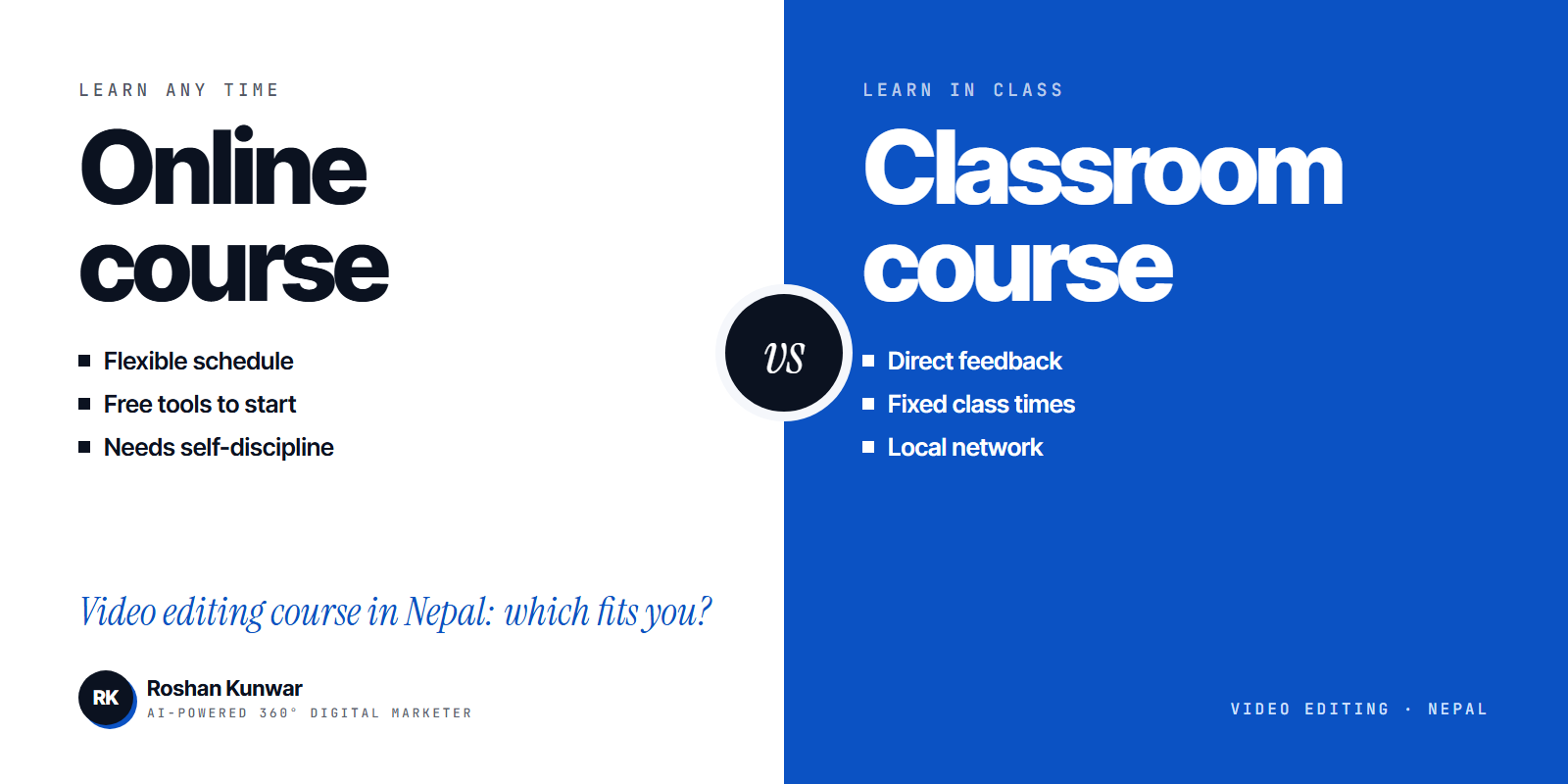
Both can work. The best choice depends on how you learn.
| Online course | Classroom course | |
|---|---|---|
| Schedule | Learn any time | Fixed class times |
| Feedback | Varies; some have none | Direct feedback from the trainer |
| Discipline needed | High | Lower, the class keeps you on track |
| Location | Anywhere in Nepal | Mostly in big cities like Kathmandu |
| Networking | Online communities | Classmates and local contacts |
If you choose online learning, join a community or find a mentor who will review your edits. Feedback on real work is what makes you improve, whichever format you pick.
How to judge a course before you pay
Fees for video editing courses in Nepal vary a lot, so compare what you get rather than only the price. Ask these questions:
- Can I see the full syllabus? Check it covers sound, captions and exporting, not only cutting and effects.
- What has the trainer made? Ask for their portfolio or client work. Good editors are happy to show it.
- How much practice is included? You should edit something in almost every class.
- Will I finish with portfolio pieces? Aim for at least 3 to 5 finished videos.
- Does the course use real footage and briefs? Practising on client-style briefs prepares you for actual work.
- Is there support after the course? Some courses offer feedback groups or help finding first projects.
Be careful with promises like "guaranteed job" or "earn lakhs in one month". Skill and a good portfolio get you work; a certificate alone usually does not.
Build a portfolio while you learn
You do not need clients to build a portfolio.
- Ask a friend's shop for permission to shoot and edit a short clip, and show the before and after.
- Shoot product clips at home and turn them into a 15-second ad.
- Make a short explainer on a topic you know.
- Create one vertical video in each style: product, talking head, tutorial and event highlight.
YouTube Shorts can be up to three minutes long, but for business reels shorter is usually better. Practise telling a clear story in 15 to 30 seconds.
How to start earning
- Offer editing to local businesses that already post videos but edit poorly.
- Create a simple package, for example a set number of reels per month.
- Show your portfolio on Instagram, TikTok or a simple website.
- Learn the basics of ads and hooks so your edits help sales, not just look nice. My AI video ads guide shows where editing is heading.
- Read freelancing in Nepal for students for finding first clients and handling payments.
FAQ
How long does it take to learn video editing?
You can learn the basics in a few weeks of regular practice. Becoming good enough for paid client work usually takes a few months of editing real projects and getting feedback.
Can I learn video editing on a mobile phone?
Yes, for short-form video. Apps like CapCut are enough to start. For longer videos, colour work and client projects, a computer gives you more control.
Which is better: DaVinci Resolve or Premiere Pro?
Both are professional tools. DaVinci Resolve has a free version, which makes it a good place to start. Premiere Pro is common in agencies. Learn one well; the skills transfer.
Is a certificate needed to get video editing work?
Clients mostly care about your portfolio and reliability. A certificate can help with some jobs, but your finished videos matter more.