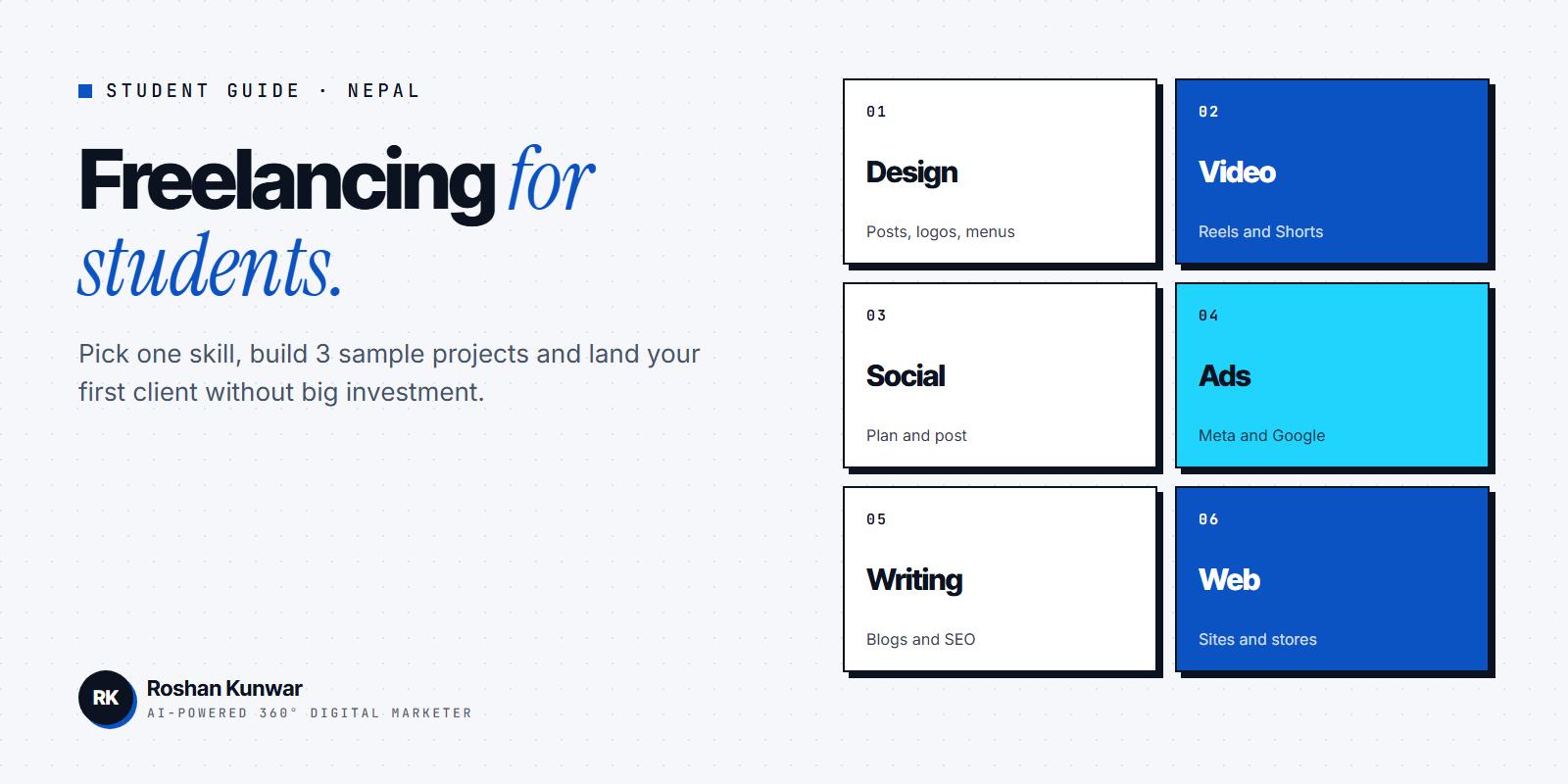
"Freelancing in Nepal for students" is one of the most searched career questions among young people here. Many students want to earn while studying, gain real experience, or build a career that does not depend on one office.
The honest answer: freelancing works, but not overnight. This guide explains which skills are in demand for digital work, how to build a portfolio with no clients, where to find your first projects, and the mistakes that waste months.
What freelancing actually means
A freelancer sells a skill to clients project by project, instead of working for one employer. You might design social media posts for a cafe in Pokhara, edit videos for a creator in the US, or run Facebook ads for a clothing brand in Kathmandu.
| Job | Freelancing | |
|---|---|---|
| Income | Fixed salary | Changes with projects |
| Clients | One employer | Many clients |
| Schedule | Set hours | Flexible, but deadlines are strict |
| Finding work | Apply once | You keep finding new clients |
| Growth | Promotions | Better skills, higher rates, repeat clients |
Freelancing gives freedom, but you are also your own sales, accounts and customer service team.
6 skills students can start with
These skills are practical, can be learned online, and are needed by businesses in Nepal and abroad.
1. Graphic design
Social media posts, logos, menus, brochures and ad creatives. Every business needs visuals. Start with design basics: layout, typography and colour. See examples on my graphic design page.
2. Video editing
Short-form video for Reels, TikTok and YouTube Shorts is in high demand. Learn cutting, captions, sound and pacing. My video editing page shows the type of work businesses ask for.
3. Social media management
Planning content, writing captions, scheduling posts and replying to comments for businesses that do not have time. This pairs well with design.
4. Paid ads (Meta and Google)
Running ads that bring messages, leads or sales. It needs more responsibility because you handle a client's money, so practise carefully. Google offers online product training and certification on Skillshop, designed by Google product experts.
5. Writing and SEO
Blog posts, website copy, product descriptions and SEO. Good English and clear thinking matter more than fancy words.
6. Website building
Simple business websites, landing pages and online stores. You can start with website builders, then learn more technical skills over time. See my web development page for the kind of sites businesses need.
| Skill | Easy to start? | Tools to learn | Good for |
|---|---|---|---|
| Graphic design | Yes | Canva, Figma, Photoshop | Creative students |
| Video editing | Yes | CapCut, Premiere Pro, DaVinci Resolve | Students who like video |
| Social media management | Yes | Meta Business Suite, scheduling tools | Organised communicators |
| Paid ads | Medium | Meta Ads Manager, Google Ads | Students good with numbers |
| Writing and SEO | Medium | Google Docs, Search Console | Strong writers |
| Website building | Medium to hard | WordPress, website builders, code | Problem solvers |
Pick one skill first. Trying to learn all six at once is the most common reason students give up.
Step-by-step: from zero to first client
Step 1: Learn the basics in 4–8 weeks
Use free tutorials, official help centres and practice projects. Spend more time doing than watching. If you prefer a structured class, my guide on choosing a digital marketing course in Nepal lists what a good course should teach.
Step 2: Build 3 sample projects
You do not need clients to build a portfolio. Make realistic samples:
- Redesign the menu or social posts of a local shop
- Edit a 30-second promo video for an imaginary product
- Write a landing page for a made-up course
Label them clearly as sample or concept work. Never claim a business was your client if it was not.
Step 3: Make a simple portfolio
Put your 3–5 best pieces in one place: a Behance profile, a Google Drive folder with a clean cover, or a simple website. Show the problem, what you made, and the result if you have one. My projects page is an example of how to present each project with context.
Step 4: Find your first client
Start close to home. Many students get their first work from:
- Family, friends and local shops that need posts or a page set up
- College clubs, events and seniors starting businesses
- Facebook groups and LinkedIn posts asking for designers or editors
- International freelance marketplaces, once your portfolio is ready
Your first project may be small or low paid. Its real value is a testimonial and a real result for your portfolio.
Step 5: Do the work professionally
- Agree on scope, price, deadline and number of revisions in writing before starting
- Ask for part of the payment upfront for new clients
- Reply on time and share progress
- Deliver files in the format the client needs
Repeat clients and referrals usually matter more than any platform.
Step 6: Set up payments and records
Before you start earning, learn how you will receive money: local payments through bank or wallet for Nepali clients, and the options available for foreign clients. Rules and options can change, so check the current process with your bank and keep a record of every payment. As your income grows, talk to an accountant about registration and tax.
Using AI as a student freelancer
AI tools can speed up drafts, captions, image ideas and video edits. Clients increasingly ask for people who can use them well. But AI does not replace taste, judgement and checking. Learn the skill properly, then use AI to work faster. My guide to AI tools for business explains the main tool types.
Mistakes to avoid
- Paying for "guaranteed income" schemes or courses that promise you will earn a fixed amount
- Signing up everywhere with no portfolio
- Underpricing forever. Low rates are fine at the start; raise them as your skills and reviews grow
- Ignoring studies. Plan your hours so exams do not suffer
- Sharing account passwords or personal documents with people you do not trust
FAQ
Can I start freelancing in Nepal without investment?
You can start with a laptop or even a good phone for some tasks, internet and free tools. Paid software and courses can come later, once you know which skill you want to grow.
Which freelancing skill is best for beginners in Nepal?
Graphic design, video editing and social media management are easier to start because you can practise with free tools and show results quickly. Choose the one you enjoy, because you will need to practise it a lot.
How long does it take to get the first client?
It depends on your skill level, portfolio and how actively you look. Many students take a few months. Building samples and asking people you already know usually speeds it up.
Do I need to be good at English?
For international clients, clear written English helps a lot. For local clients in Nepal, you can work in Nepali, but basic English is still useful for tools and learning.